Please find us at
Asia Now, Stand R01, placed in Cour des Remises
Monnaie de Paris
11 Quai de Conti
75006 Paris
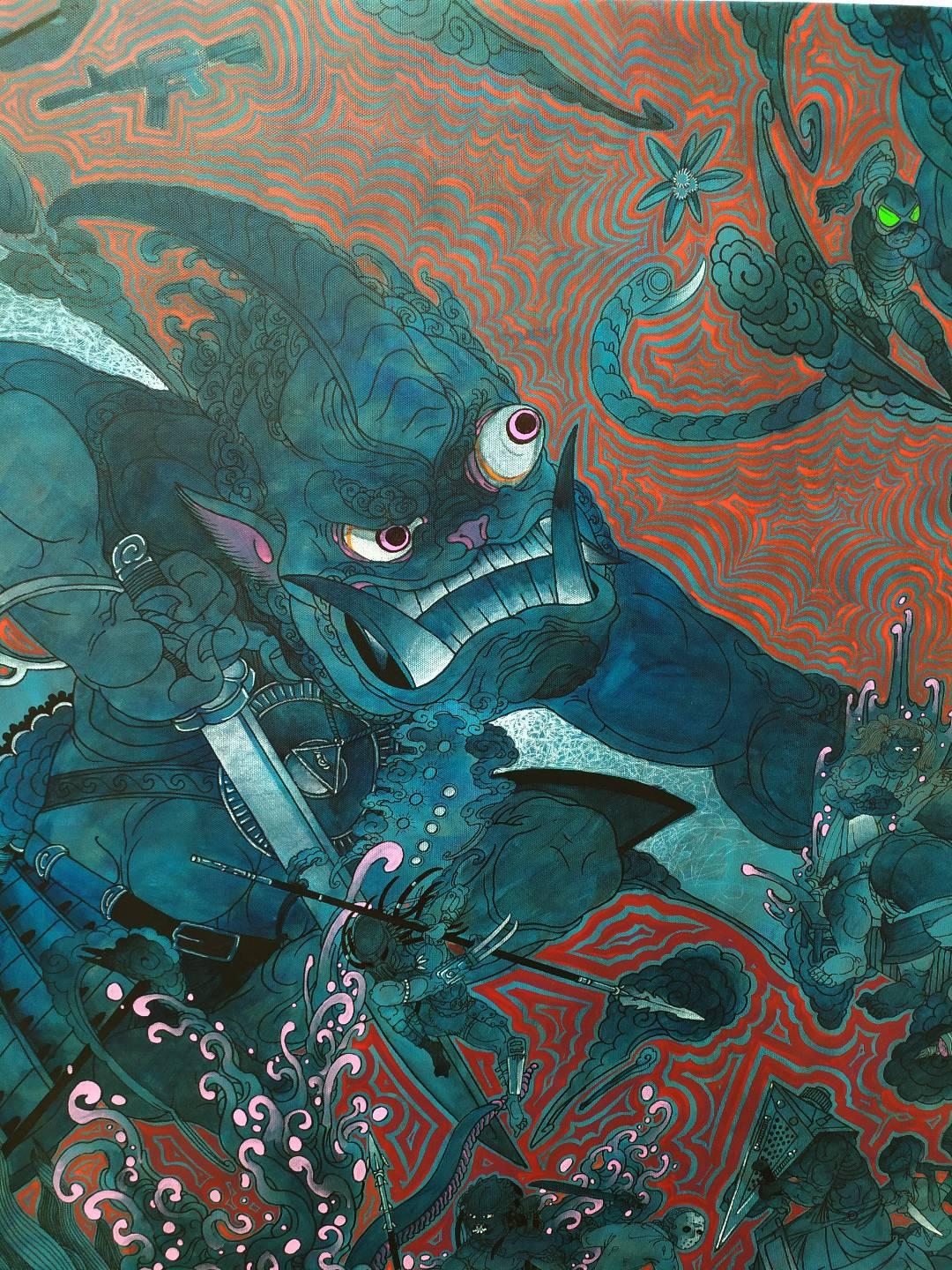
In Mongolia spirituality is not optional. The spiritual world is real.
Contemporary art therefore is deeply immersed in age-old ideas of nature and shamanic practices, which have blended with Buddhist heritage and are, maybe not surprisingly at the core of Mongolian identity, which had been under pressures from Qing dynasty China ans Soviet Communism.
Mongol Zurag | Mongolian Art has its root in the short interregnum between the collapse of the Manchu rule in 1912 and the establishment of communist Mongolia and has bee a distinclty modern art movement since.
Culturally artist in Mongolia draw their energies from a strongly present love for nature, tengrism and a belief in the company of a spiritual world.
This year´s pavilion at the Venice Biennale features four artist. Two of which are being presentes at Asia Now:
Nomin Bold, 1982, is the most reknowned artist from Mongolia and the only one who ever participated in documenta (2017) and at the Venice Biennale (2026).
Gerelkhuu Ganbold, 1988, is deeply immersed in the spirit world – most of his friends are practicing shamans. He also is participating in the Venice Biennale (2026).
Baatarzorig Batjargal, 1983, is a leading figure in contemporary Mongolian art. Central to his practice is the exploration of cultural preservation and loss across different eras of Mongolian history. He draws attention to ruptures
caused by the political repression of the 1930s, when large parts of the country’s traditions were eradicated.
Shijirbaatar Jambalsuren, 1987, is a Mongolian contemporary artist whose multidisciplinary practice spans painting, installation, performance, and socially engaged art.
Please find us at
Asia Now, Stand R01, placed in Cour des Remises
Monnaie de Paris
11 Quai de Conti
75006 Paris
In Mongolia spirituality is not optional. The spiritual world is real.
Contemporary art therefore is deeply immersed in age-old ideas of nature and shamanic practices, which have blended with Buddhist heritage and are, maybe not surprisingly at the core of Mongolian identity, which had been under pressures from Qing dynasty China ans Soviet Communism.
Mongol Zurag | Mongolian Art has its root in the short interregnum between the collapse of the Manchu rule in 1912 and the establishment of communist Mongolia and has bee a distinclty modern art movement since.
Culturally artist in Mongolia draw their energies from a strongly present love for nature, tengrism and a belief in the company of a spiritual world.
This year´s pavilion at the Venice Biennale features four artist. Two of which are being presentes at Asia Now:
Nomin Bold, 1982, is the most reknowned artist from Mongolia and the only one who ever participated in documenta (2017) and at the Venice Biennale (2026).
Gerelkhuu Ganbold, 1988, is deeply immersed in the spirit world – most of his friends are practicing shamans. He also is participating in the Venice Biennale (2026).
Baatarzorig Batjargal, 1983, is a leading figure in contemporary Mongolian art. Central to his practice is the exploration of cultural preservation and loss across different eras of Mongolian history. He draws attention to ruptures
caused by the political repression of the 1930s, when large parts of the country’s traditions were eradicated.
Shijirbaatar Jambalsuren, 1987, is a Mongolian contemporary artist whose multidisciplinary practice spans painting, installation, performance, and socially engaged art.