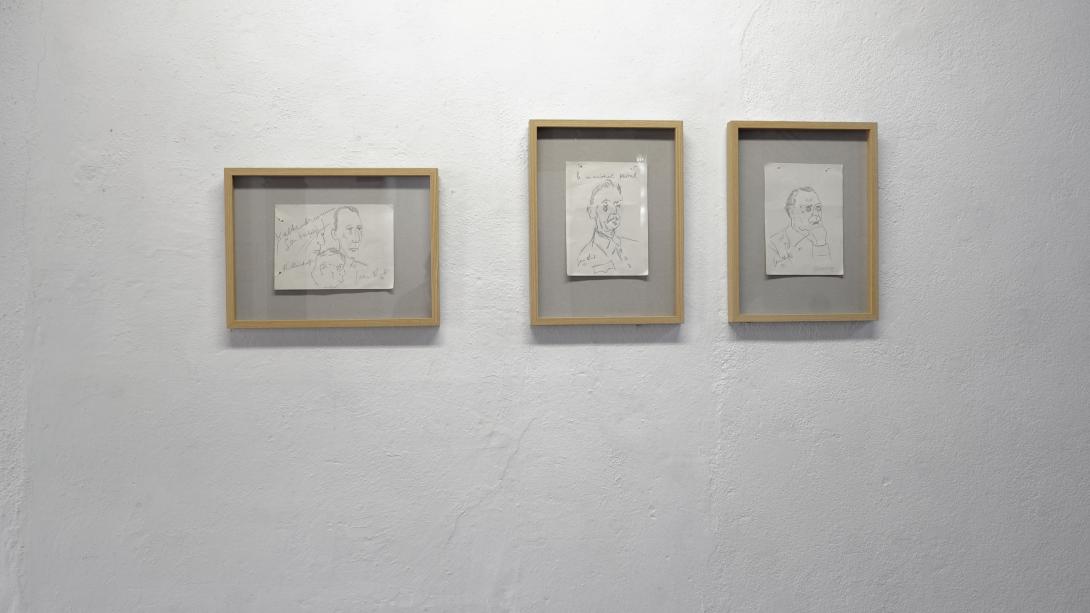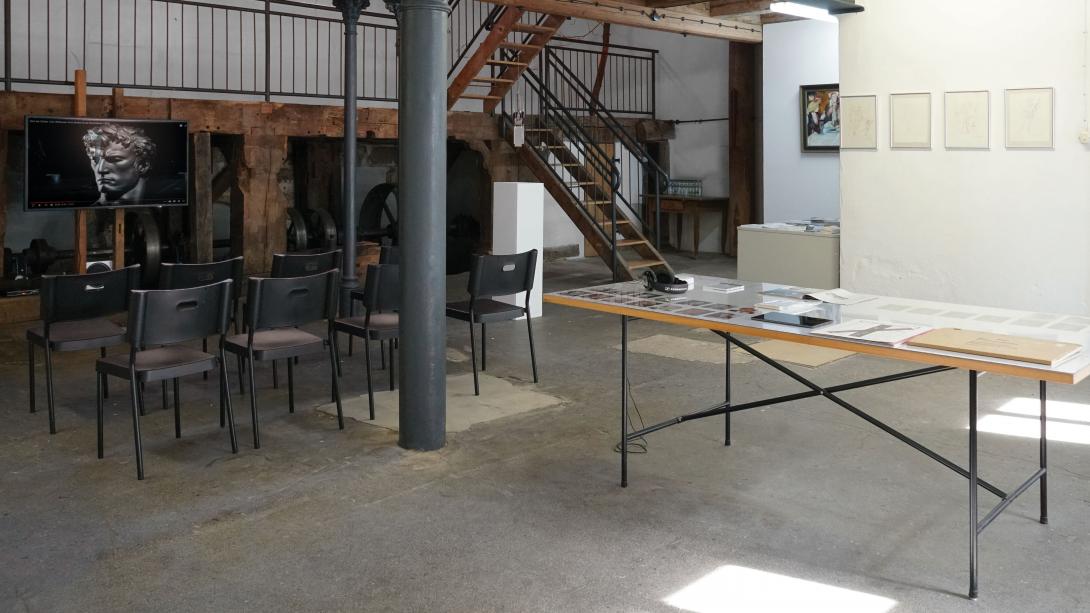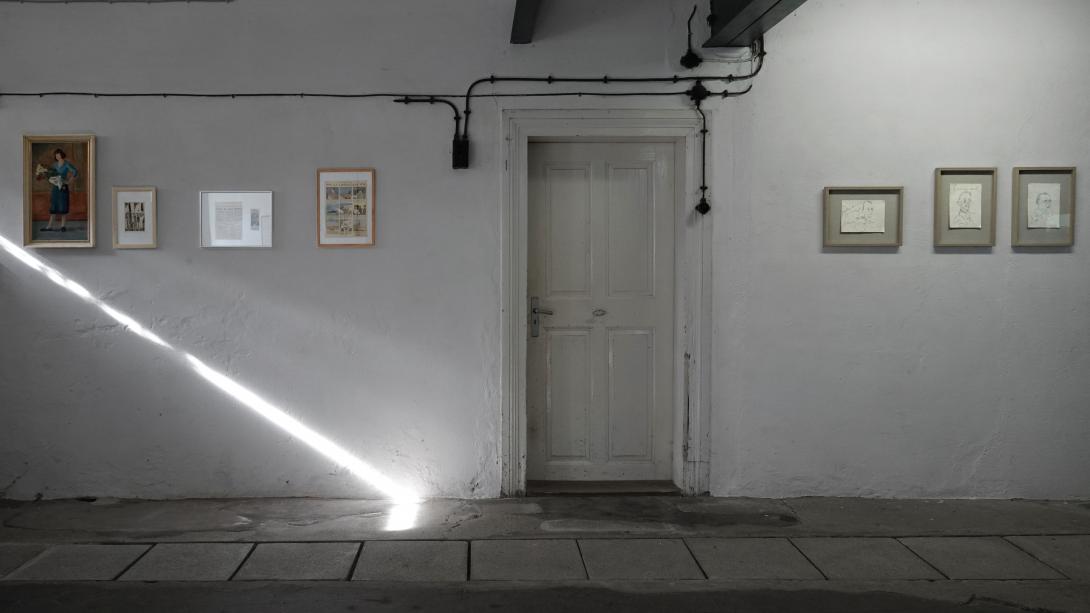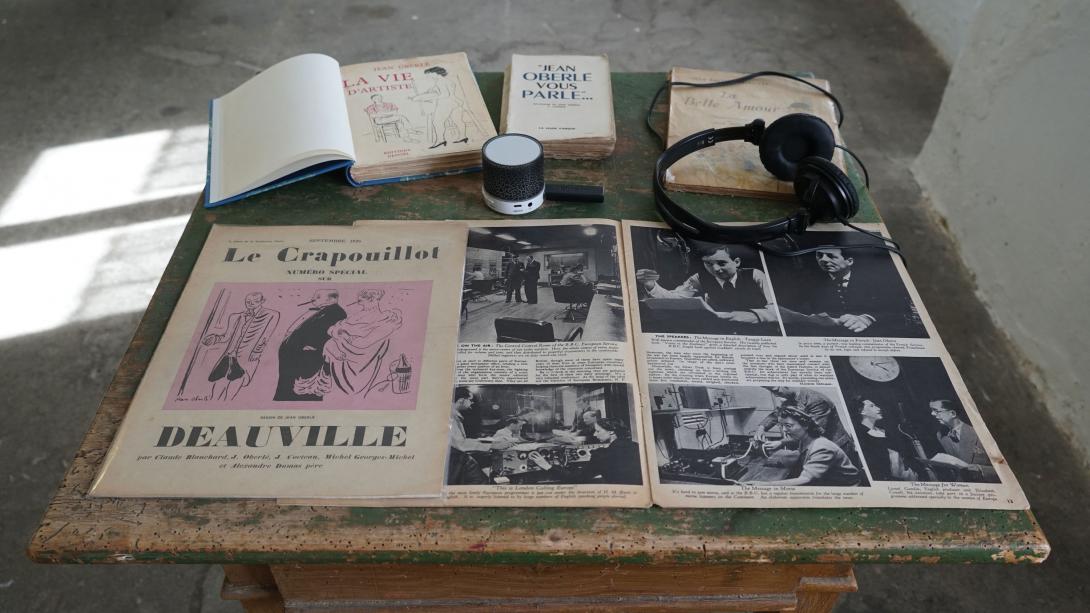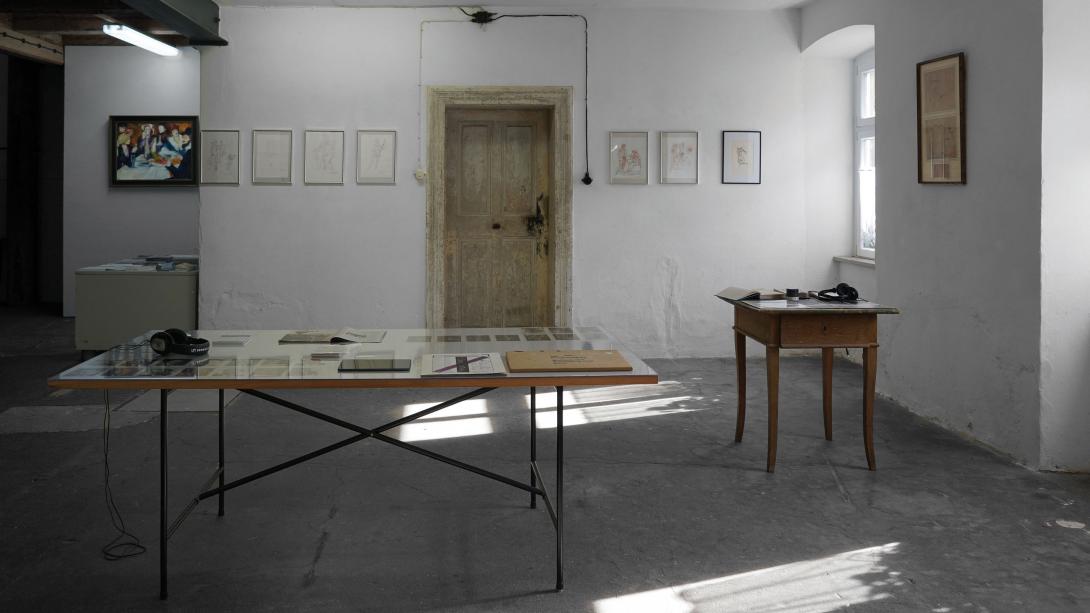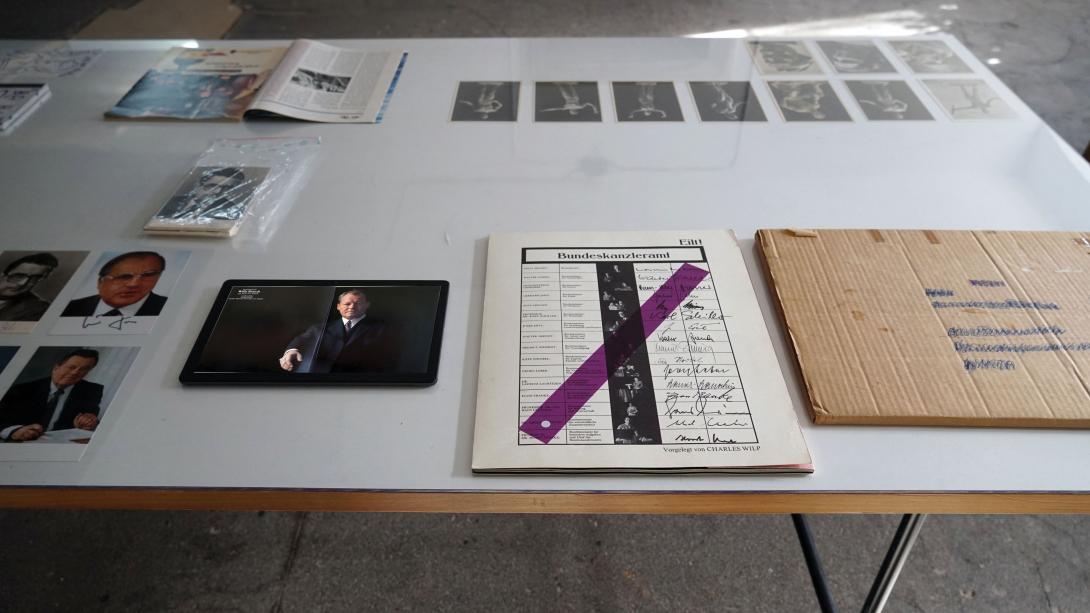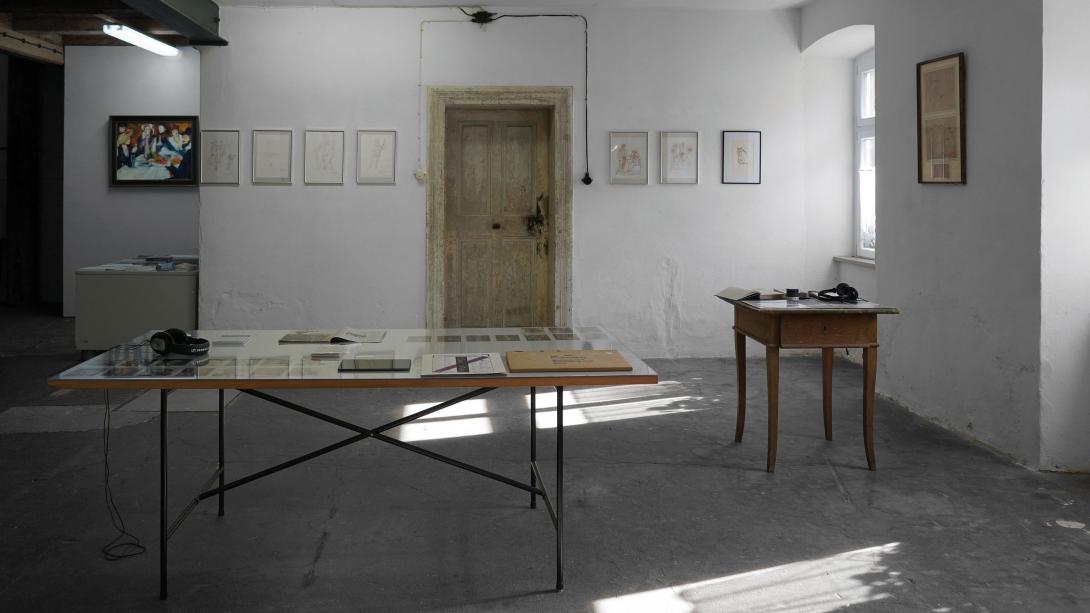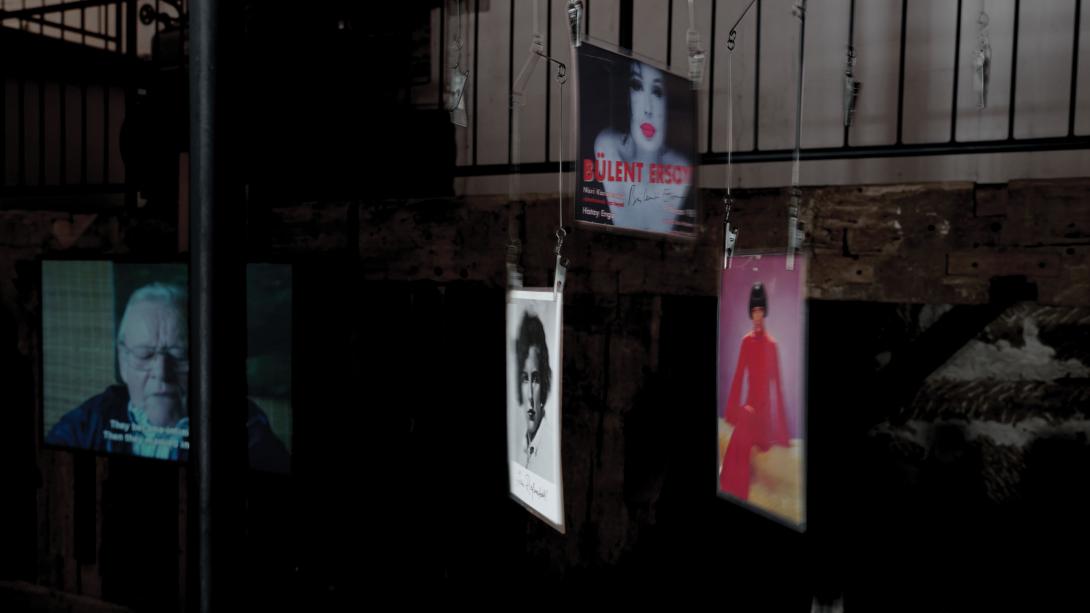
Artists and Power. Between Opportunism and Obsession—Evil and the Image. Lutz Dammbeck, Jean Oberlé, Jean Cocteau, Arno Breker, Ellinor Michel, Wolfgang Müller (Tödliche Doris), A.R. Penck, Charles Wilp (via Josef Pollok). Art and power have always been interdependent. It is hardly a revelation that those "at the very top" all know one another. Yet, one can learn from Lutz Dammbeck—whose 1992 film *Die Zeit der Götter* (The Time of the Gods) explores the biographies of artists and politicians in Paris and Berlin before and during the Second World War, as well as in the two post-war German states—how black and white can blend into an unsettling gray area. He traces the intricate web of relationships that extended into contemporary societies and political networks. The film focuses primarily on Arno Breker, who had established strong connections in Paris as a young man. Aristide Maillol was among his mentors; Breker was also very close friends with Jean Cocteau—they even lived in the same building. Breker extended his protection to Picasso and others. The gay actor Jean Marais once remarked: "Arno Breker saved my life." In contrast, there is the artist Jean Oberlé—a figure less well-known here, though a street in Paris bears his name. Also a protégé of Maillol, Oberlé joined the Resistance during the occupation, became a journalist for *Radio Londres*, and called for resistance against the Vichy regime and the Nazis. After the war, he served as an observer at the Nuremberg trials, where he produced disturbing drawings of Göring, Kaltenbrunner, Keitel, and Ribbentrop—works that are featured in this exhibition. They stand as a harrowing document of the presence of evil. Furthermore, THE gallery brings together works and documents that explore artistic obsessions and encounters with power—ranging from Ellinor Michel—Andreas Baader’s lover, in whose kitchen the RAF built bombs—to the wonderfully irreverent gesture of A.R. Penck, who, together with his friend Helge Leiberg, produced a jazz CD inside Breker’s Berlin studio.
Künstler und Macht. Zwischen Opportunismus und Obsession – das Böse und das Bild.
Artists and Power. Between Opportunism and Obsession—Evil and the Image. Lutz Dammbeck, Jean Oberlé, Jean Cocteau, Arno Breker, Ellinor Michel, Wolfgang Müller (Tödliche Doris), A.R. Penck, Charles Wilp (via Josef Pollok). Art and power have always been interdependent. It is hardly a revelation that those "at the very top" all know one another. Yet, one can learn from Lutz Dammbeck—whose 1992 film *Die Zeit der Götter* (The Time of the Gods) explores the biographies of artists and politicians in Paris and Berlin before and during the Second World War, as well as in the two post-war German states—how black and white can blend into an unsettling gray area. He traces the intricate web of relationships that extended into contemporary societies and political networks. The film focuses primarily on Arno Breker, who had established strong connections in Paris as a young man. Aristide Maillol was among his mentors; Breker was also very close friends with Jean Cocteau—they even lived in the same building. Breker extended his protection to Picasso and others. The gay actor Jean Marais once remarked: "Arno Breker saved my life." In contrast, there is the artist Jean Oberlé—a figure less well-known here, though a street in Paris bears his name. Also a protégé of Maillol, Oberlé joined the Resistance during the occupation, became a journalist for *Radio Londres*, and called for resistance against the Vichy regime and the Nazis. After the war, he served as an observer at the Nuremberg trials, where he produced disturbing drawings of Göring, Kaltenbrunner, Keitel, and Ribbentrop—works that are featured in this exhibition. They stand as a harrowing document of the presence of evil. Furthermore, THE gallery brings together works and documents that explore artistic obsessions and encounters with power—ranging from Ellinor Michel—Andreas Baader’s lover, in whose kitchen the RAF built bombs—to the wonderfully irreverent gesture of A.R. Penck, who, together with his friend Helge Leiberg, produced a jazz CD inside Breker’s Berlin studio.