
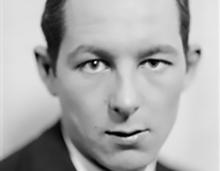
Jean Oberlé (January 13, 1900, Brest – March 2, 1961, Paris) was a French painter who became a member of the French Resistance. Born in Brest in 1900, he illustrated a number of contemporary books and worked for various Parisian newspapers and magazines, the most notable being *Le Crapouillot*. In 1934, he was awarded the Prix Blumenthal. In 1940, he was present at the BBC’s Broadcasting House alongside Jean Marin when General de Gaulle delivered his famous speech on June 18, 1940, calling upon the French people to resist.
During the Second World War, he became one of the key French voices on *Radio Londres*—the BBC’s broadcasts for the Free French. He coined many of the famous slogans used in these broadcasts, most notably: “Radio Paris ment, Radio Paris ment, Radio Paris est allemand” (“Radio Paris lies, Radio Paris lies, Radio Paris is German”). *Radio Londres* was a radio service operated by the BBC in London from 1940 to 1944, aimed at Nazi-occupied France. Conducted entirely in French and run by Free French individuals who had fled occupied territory, the service served not only to counter the propaganda broadcasts of the German-controlled *Radio Paris* and the Vichy regime’s *Radiodiffusion Nationale*, but also to urge the French people to rise up and to transmit coded messages to the French Resistance. A few young broadcasters (Jacques Duchesne, Jean Oberlé, Pierre Bourdan, Maurice Schumann, and Pierre Dac) broke with the formal style of French radio stations and shifted the tone by incorporating personal messages, sketches, songs, jokes, and humorous advertisements.
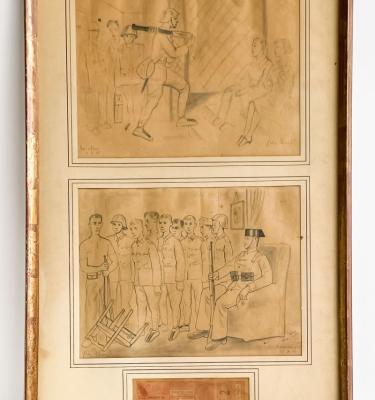
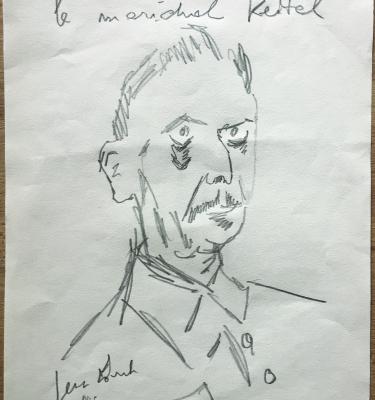
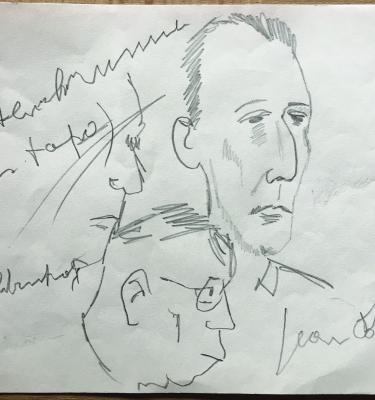
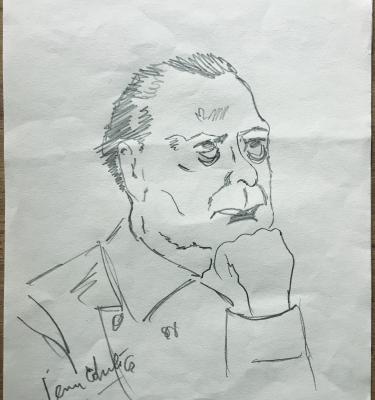
Jean Oberlé (January 13, 1900, Brest – March 2, 1961, Paris) was a French painter who became a member of the French Resistance. Born in Brest in 1900, he illustrated a number of contemporary books and worked for various Parisian newspapers and magazines, the most notable being *Le Crapouillot*.
Biography
Jean Oberlé (January 13, 1900, Brest – March 2, 1961, Paris) was a French painter who became a member of the French Resistance. Born in Brest in 1900, he illustrated a number of contemporary books and worked for various Parisian newspapers and magazines, the most notable being *Le Crapouillot*. In 1934, he was awarded the Prix Blumenthal. In 1940, he was present at the BBC’s Broadcasting House alongside Jean Marin when General de Gaulle delivered his famous speech on June 18, 1940, calling upon the French people to resist.
During the Second World War, he became one of the key French voices on *Radio Londres*—the BBC’s broadcasts for the Free French. He coined many of the famous slogans used in these broadcasts, most notably: “Radio Paris ment, Radio Paris ment, Radio Paris est allemand” (“Radio Paris lies, Radio Paris lies, Radio Paris is German”). *Radio Londres* was a radio service operated by the BBC in London from 1940 to 1944, aimed at Nazi-occupied France. Conducted entirely in French and run by Free French individuals who had fled occupied territory, the service served not only to counter the propaganda broadcasts of the German-controlled *Radio Paris* and the Vichy regime’s *Radiodiffusion Nationale*, but also to urge the French people to rise up and to transmit coded messages to the French Resistance. A few young broadcasters (Jacques Duchesne, Jean Oberlé, Pierre Bourdan, Maurice Schumann, and Pierre Dac) broke with the formal style of French radio stations and shifted the tone by incorporating personal messages, sketches, songs, jokes, and humorous advertisements.